PancakeSwap: A Comprehensive Guide to Decentralized Trading on BNB Chain /
Introduction :>
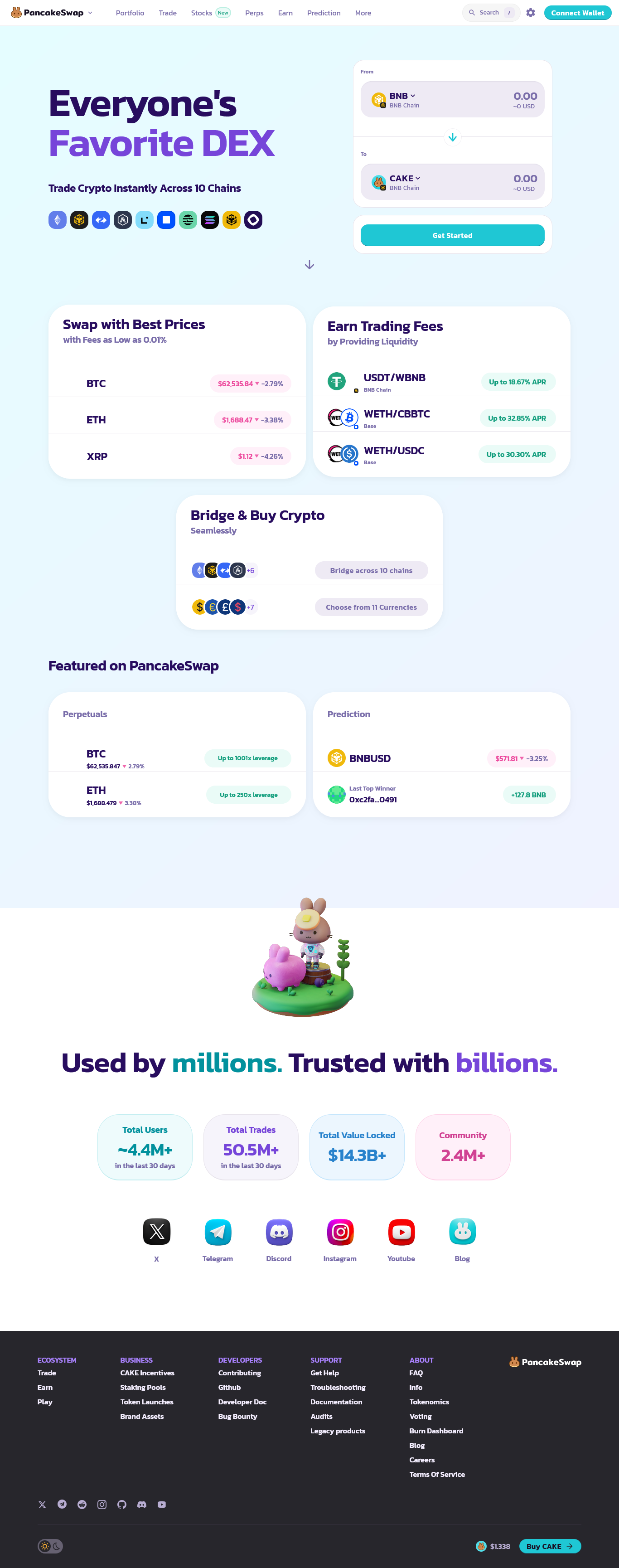
PancakeSwap is one of the largest decentralized exchanges (DEXs) in the cryptocurrency ecosystem. Built primarily on the BNB Chain, it enables users to trade digital assets directly from their wallets without relying on a centralized intermediary. Since its launch in 2020, PancakeSwap has evolved into a comprehensive decentralized finance (DeFi) platform offering token swaps, liquidity provision, staking, yield farming, prediction markets, and more.
Today, PancakeSwap plays a significant role in making DeFi services accessible to millions of users worldwide.
What Is PancakeSwap?
PancakeSwap is an automated market maker (AMM)-based decentralized exchange. Unlike traditional exchanges that match buyers and sellers through an order book, PancakeSwap uses liquidity pools funded by users. These pools allow traders to swap one cryptocurrency for another instantly.
The platform operates through smart contracts, which automatically execute transactions based on predefined rules. This decentralized approach eliminates the need for intermediaries and gives users full control over their assets.
Users can access PancakeSwap through its official website:
:> PancakeSwap Official Website :
What Is PancakeSwap?
PancakeSwap is an automated market maker (AMM)-based decentralized exchange. Unlike traditional exchanges that match buyers and sellers through an order book, PancakeSwap uses liquidity pools funded by users. These pools allow traders to swap one cryptocurrency for another instantly.
The platform operates through smart contracts, which automatically execute transactions based on predefined rules. This decentralized approach eliminates the need for intermediaries and gives users full control over their assets.
Users can access PancakeSwap through its official website:
:> PancakeSwap Official Website
How PancakeSwap Works ://
At the core of PancakeSwap are liquidity pools. Users deposit pairs of tokens into these pools and receive liquidity provider (LP) tokens in return. Traders then use these pools to exchange assets.
The process involves:
1. Liquidity Providers (LPs) contribute token pairs to pools.
2. Traders swap tokens using the available liquidity.
3. Trading fees are distributed among liquidity providers.
4. Smart contracts manage all transactions automatically.
This model allows continuous trading without requiring a centralized entity to facilitate transactions.
Key Features ://
1. Token Swaps :/
The primary function of PancakeSwap is enabling users to swap cryptocurrencies directly from their wallets. Transactions are typically fast and cost-efficient compared to many other blockchain networks.
2. Liquidity Provision :/
Users can earn rewards by supplying tokens to liquidity pools. In exchange, they receive a portion of the trading fees generated by the pool.
3. Yield Farming :/
Yield farming allows users to stake LP tokens in specific farms to earn additional rewards, often paid in PancakeSwap's native token.
4. Staking :/
PancakeSwap offers staking opportunities through "Syrup Pools," where users can lock tokens to earn passive income.
5. Cross-Chain Support :/
Although originally built for BNB Chain, PancakeSwap has expanded support to multiple blockchain ecosystems, increasing accessibility and interoperability.
6. Lottery and Gaming Features :/
PancakeSwap has introduced gamified elements, including lotteries and prediction markets, providing users with additional engagement opportunities beyond traditional trading.
Advantages of PancakeSwap ://
1. Low Transaction Costs :/
Compared to many Ethereum-based applications during periods of network congestion, PancakeSwap has historically offered lower fees, making it attractive to retail users.
2. Decentralization :/
Users maintain custody of their funds at all times, reducing reliance on centralized institutions.
3. Accessibility :/
Anyone with a compatible cryptocurrency wallet can access the platform without creating an account or undergoing lengthy registration procedures.
4. Broad Token Selection :/
PancakeSwap supports thousands of tokens within its supported blockchain ecosystems, allowing users to access a wide variety of digital assets.
Risks and Challenges :/
Despite its popularity, PancakeSwap carries risks common to DeFi platforms:
Smart Contract Risk :/
Although audited and widely used, smart contracts can contain vulnerabilities that may be exploited.
Impermanent Loss :/
Liquidity providers may experience losses compared to simply holding their assets when token prices fluctuate significantly.
Market Volatility :/
Cryptocurrency markets are highly volatile, and users may face substantial gains or losses.
Regulatory Uncertainty :/
The regulatory landscape surrounding DeFi continues to evolve globally, which could impact decentralized platforms in the future.
PancakeSwap's Impact on DeFi ://
PancakeSwap helped demonstrate that decentralized exchanges could compete with centralized platforms in terms of usability and liquidity. By offering lower fees and a broad range of DeFi products, it attracted a large user base and contributed significantly to the growth of decentralized finance on BNB Chain.
Its success also encouraged innovation among competing DEXs and expanded awareness of self-custodial financial services.
Conclusion ://
PancakeSwap has become one of the most influential decentralized exchanges in the cryptocurrency industry. Through its automated market maker model, liquidity pools, staking opportunities, and governance system, it provides users with a comprehensive suite of DeFi services while maintaining the principles of decentralization and self-custody.
As blockchain technology and decentralized finance continue to mature, PancakeSwap remains an important example of how financial services can operate without traditional intermediaries, offering users greater control, accessibility, and participation in the digital economy.